Case study · Stagebox
Offline game shows, built in two weeks
The Go Game needed to run game shows at venues with no internet at all. I shipped Stagebox in two weeks using agentic, AI-driven development.
- Client
- The Go Game
- Role
- Sole engineer
- Timeline
- 2 weeks, 2026
- Platform
- macOS, Windows, iOS, Android, web
2 wksfrom start to shipped
0internet connections needed at the venue
42 sto issue a real HTTPS certificate
How a show runs
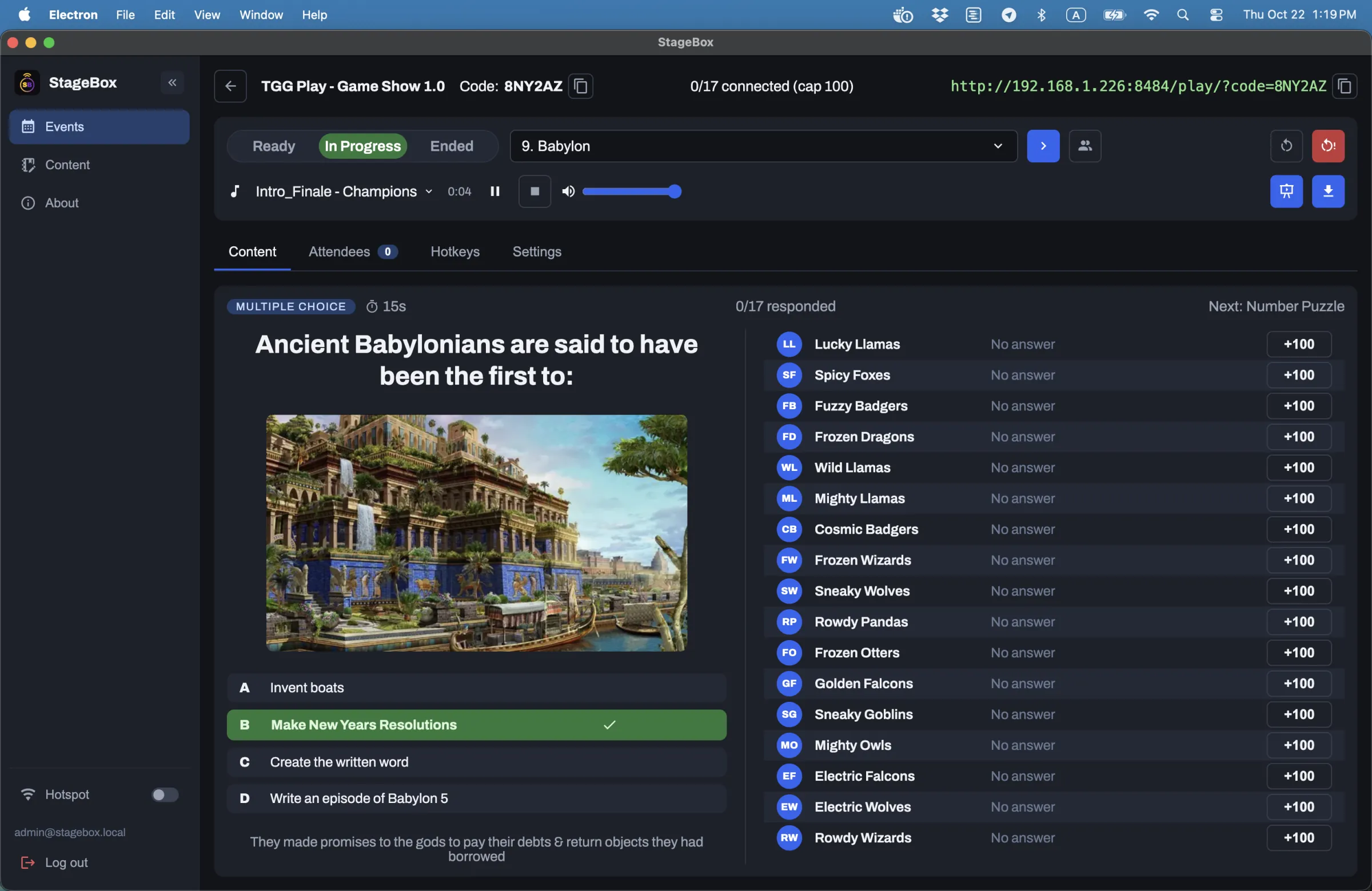
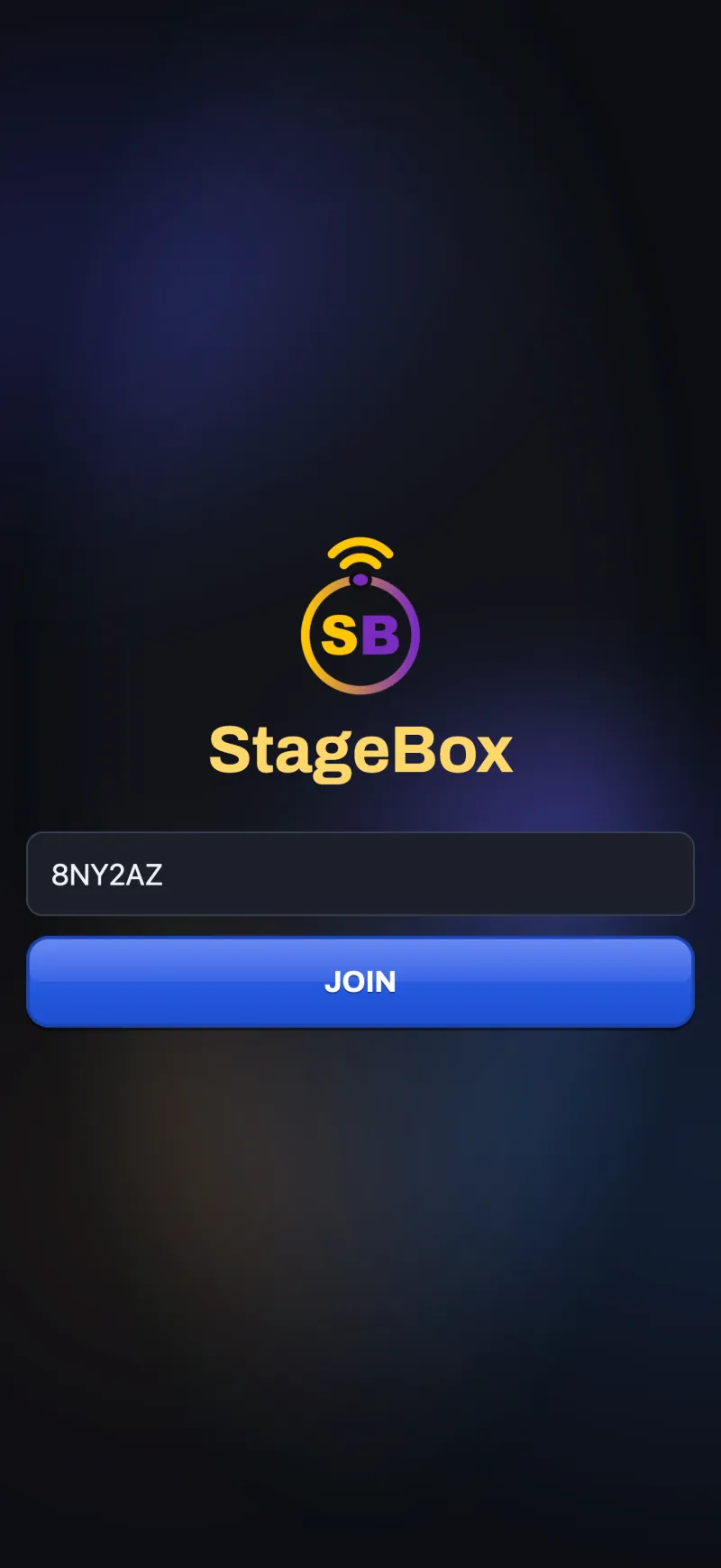
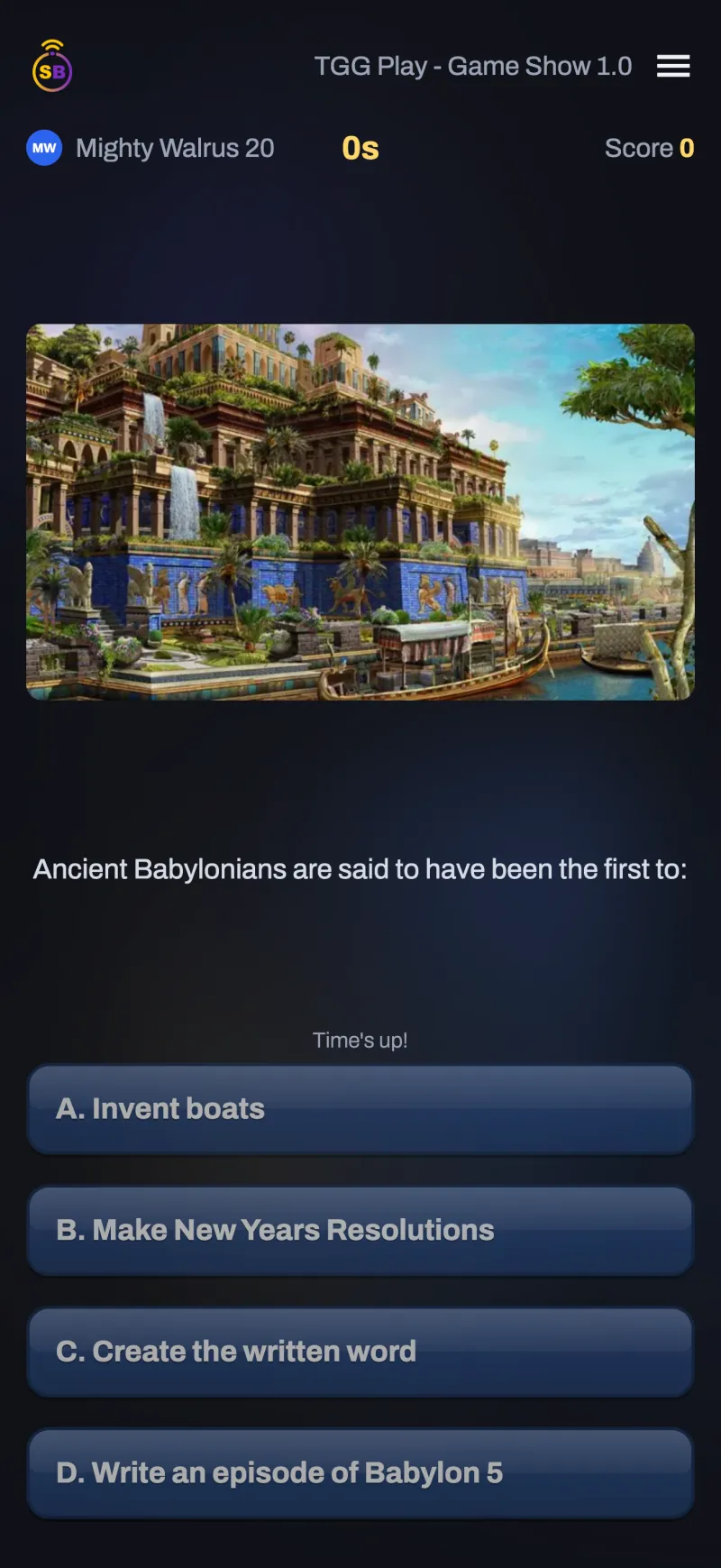
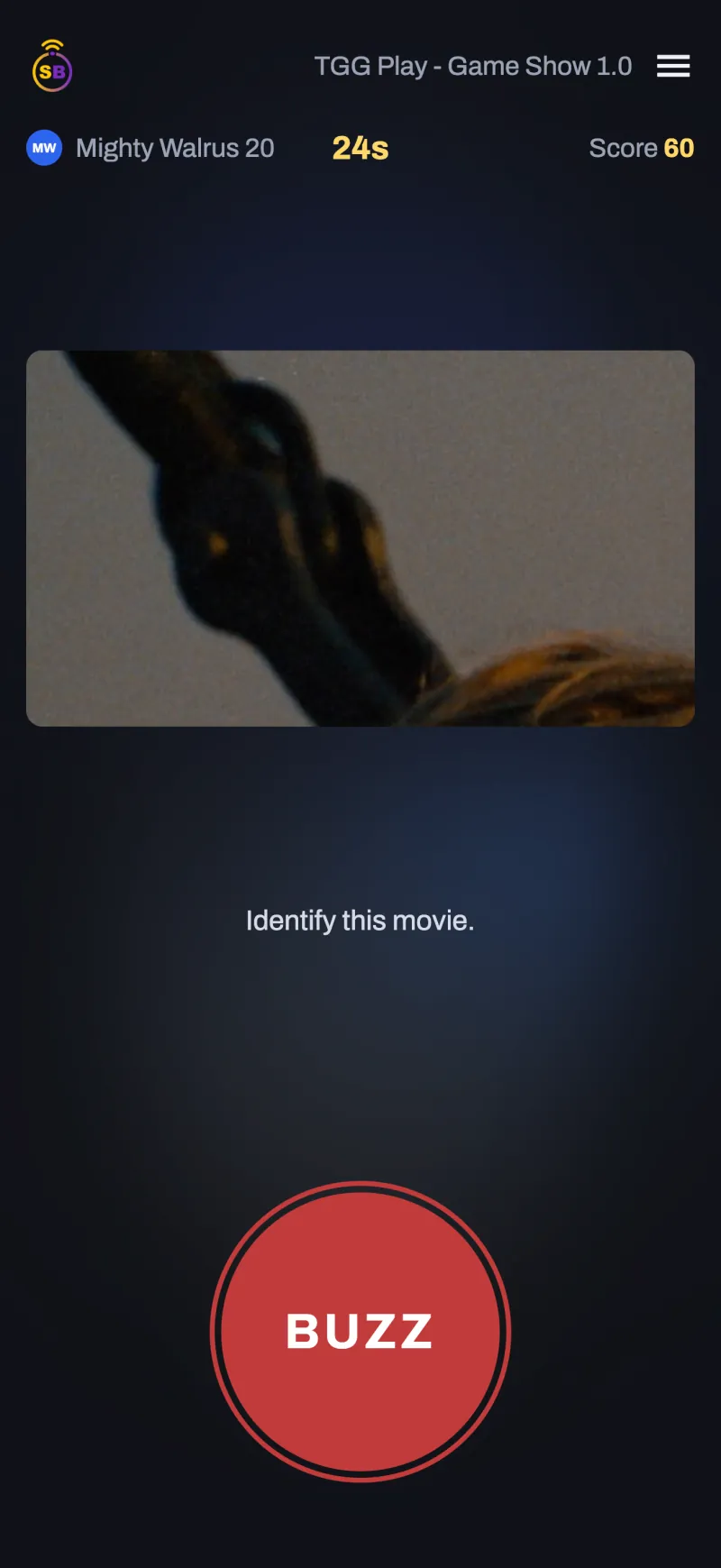
The event is authored in a web dashboard. The host's laptop downloads it and runs the whole show offline: it becomes the Wi-Fi hotspot, players join by scanning one QR code, and the laptop drives the presenter screen while everyone plays on their phones.
The hard problems
- Wi-Fi with no internet. macOS has no public API for Internet Sharing. Working with an AI agent, I reverse-engineered it and drove the SystemConfiguration C API through a JXA/Objective-C bridge. An always-on loopback service gives it something to share, so the hotspot works fully offline, with a single password prompt.
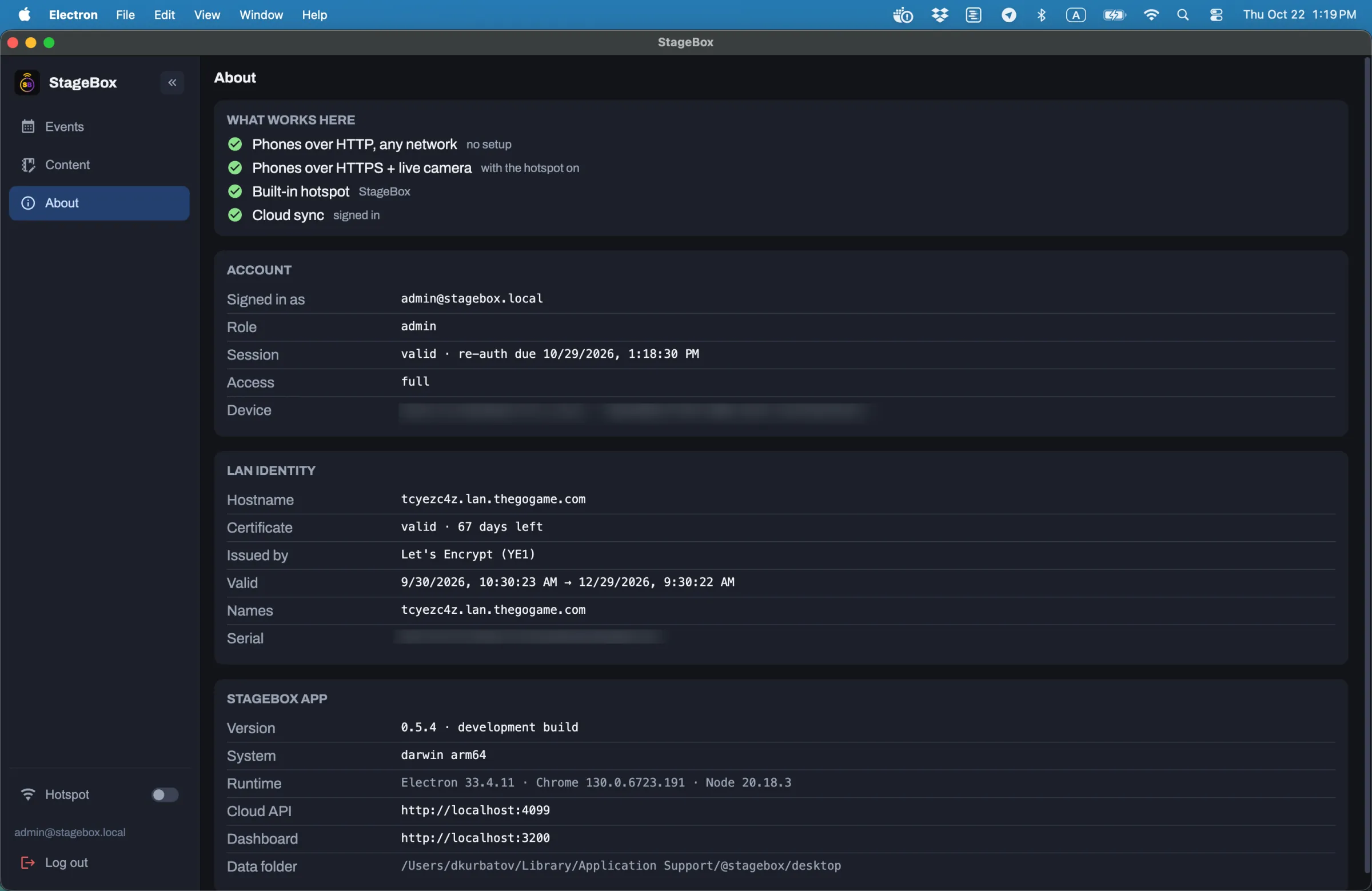
- Real HTTPS on a local network. Phones only allow camera access on secure pages, and nobody installs certificate profiles on 100 phones. Each laptop gets its own hostname with a publicly trusted Let's Encrypt certificate (the model Plex made popular), and a small DNS server on the laptop answers it with the hotspot address.
- Live camera from phones. A player who buzzes in streams their phone camera straight to the presenter screen over one-way WebRTC, with no media servers.
What it's made of
A cloud API and authoring dashboard, an Electron + React host app with a local server, React Native player apps for iOS and Android plus a web version, and a shared package for types and the message protocol.
Outcome
Built and shipped in two weeks, by one engineer directing AI agents, on a problem with no documented solution.
Screens
Stagebox in use
 Ask my AI