Case study · Weve
The virtual events platform that kept a company alive
When COVID stopped every in-person event, The Go Game needed to deliver team-building online within months. I built Weve, and we ran thousands of events a month on it.
- Client
- The Go Game
- Role
- Architect & lead engineer
- Timeline
- 2020–2026
- Platform
- Web
$10Mrevenue in 7 months
1,000sevents a month by early 2021
10,000attendees in one lobby
The problem
In 2020, COVID halted every live event The Go Game ran. The company had to move its whole business, from in-person team-building to fully remote delivery, in a few short months.
What I built
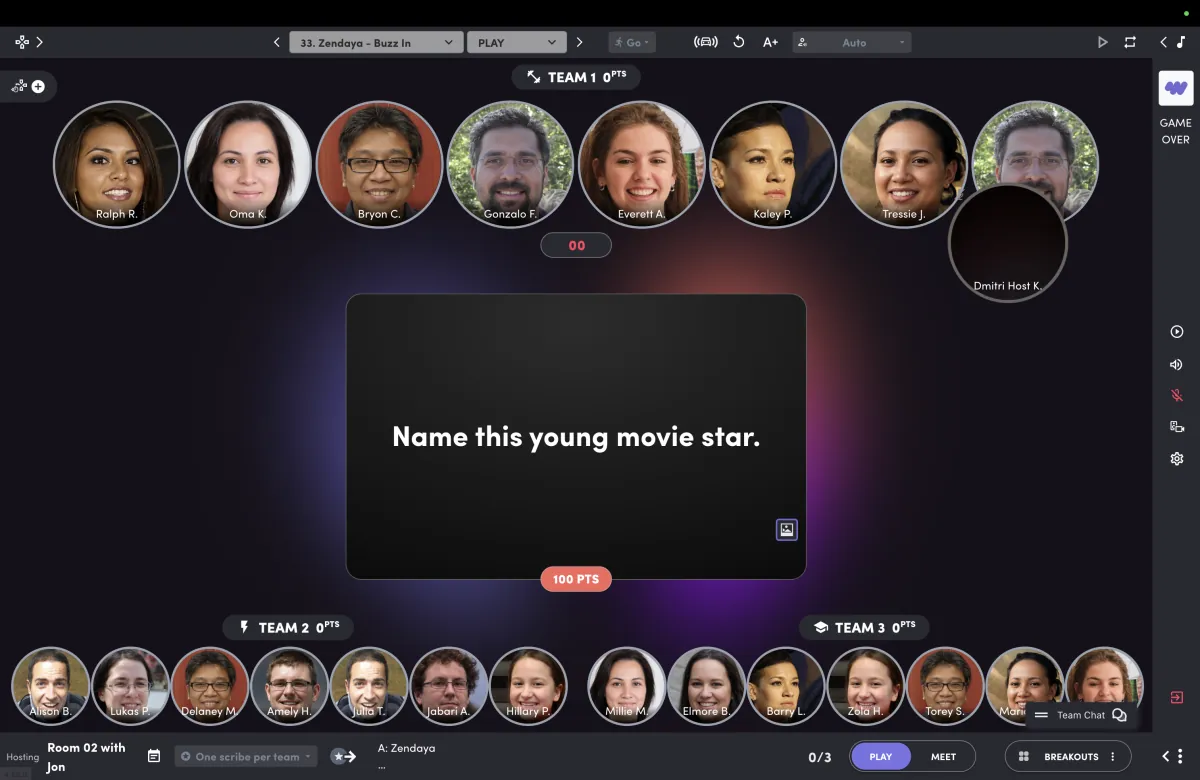
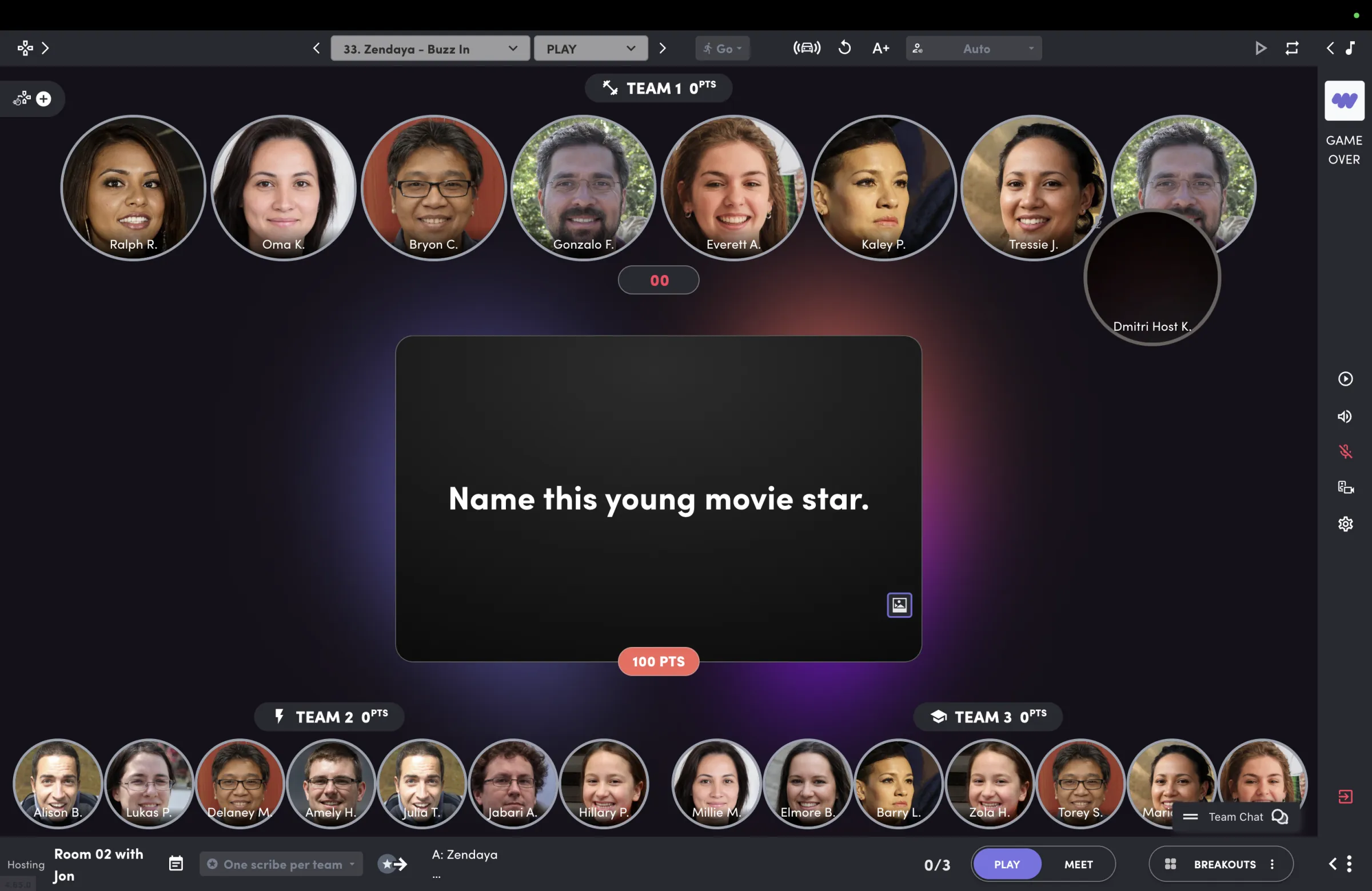
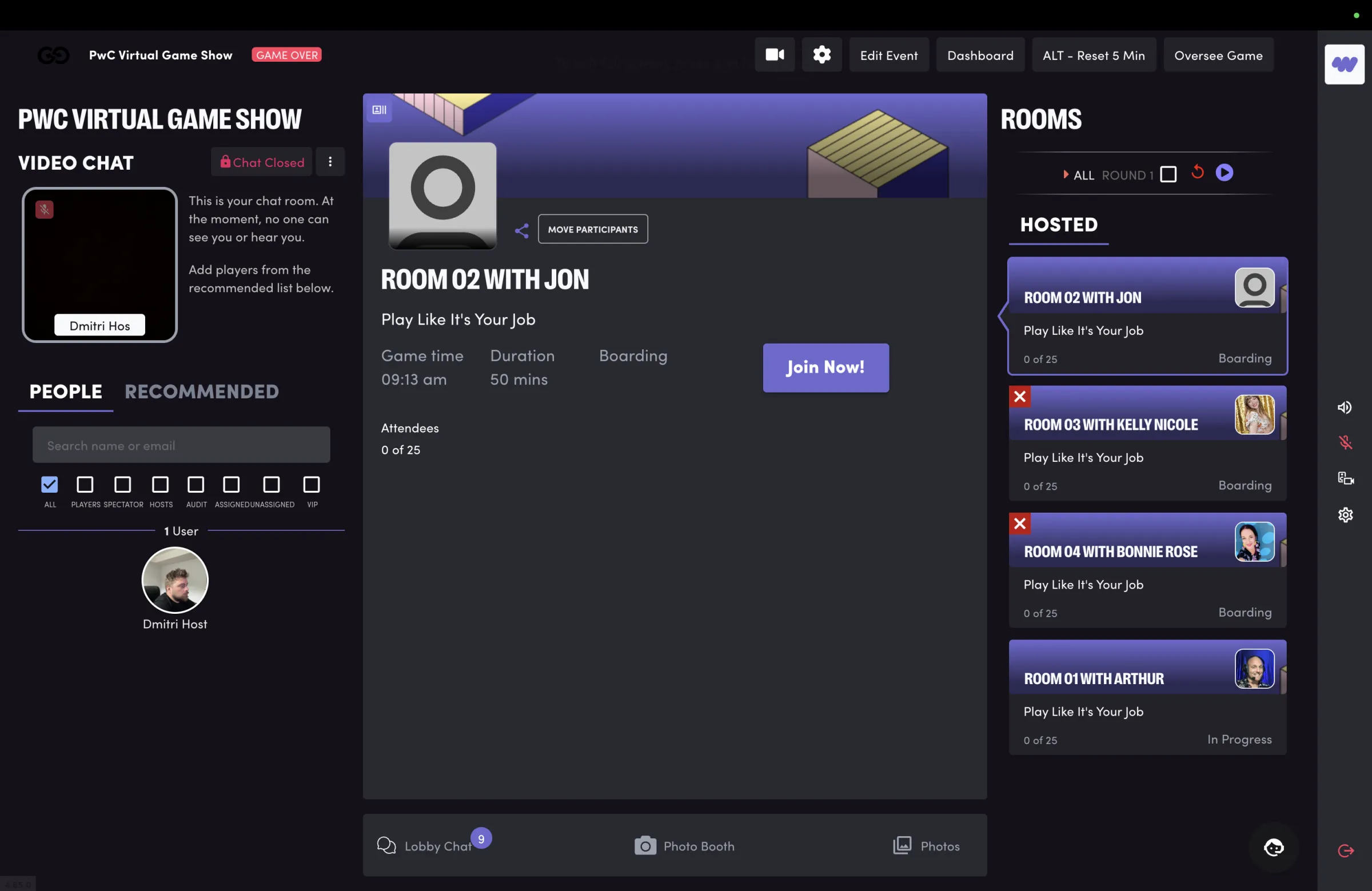
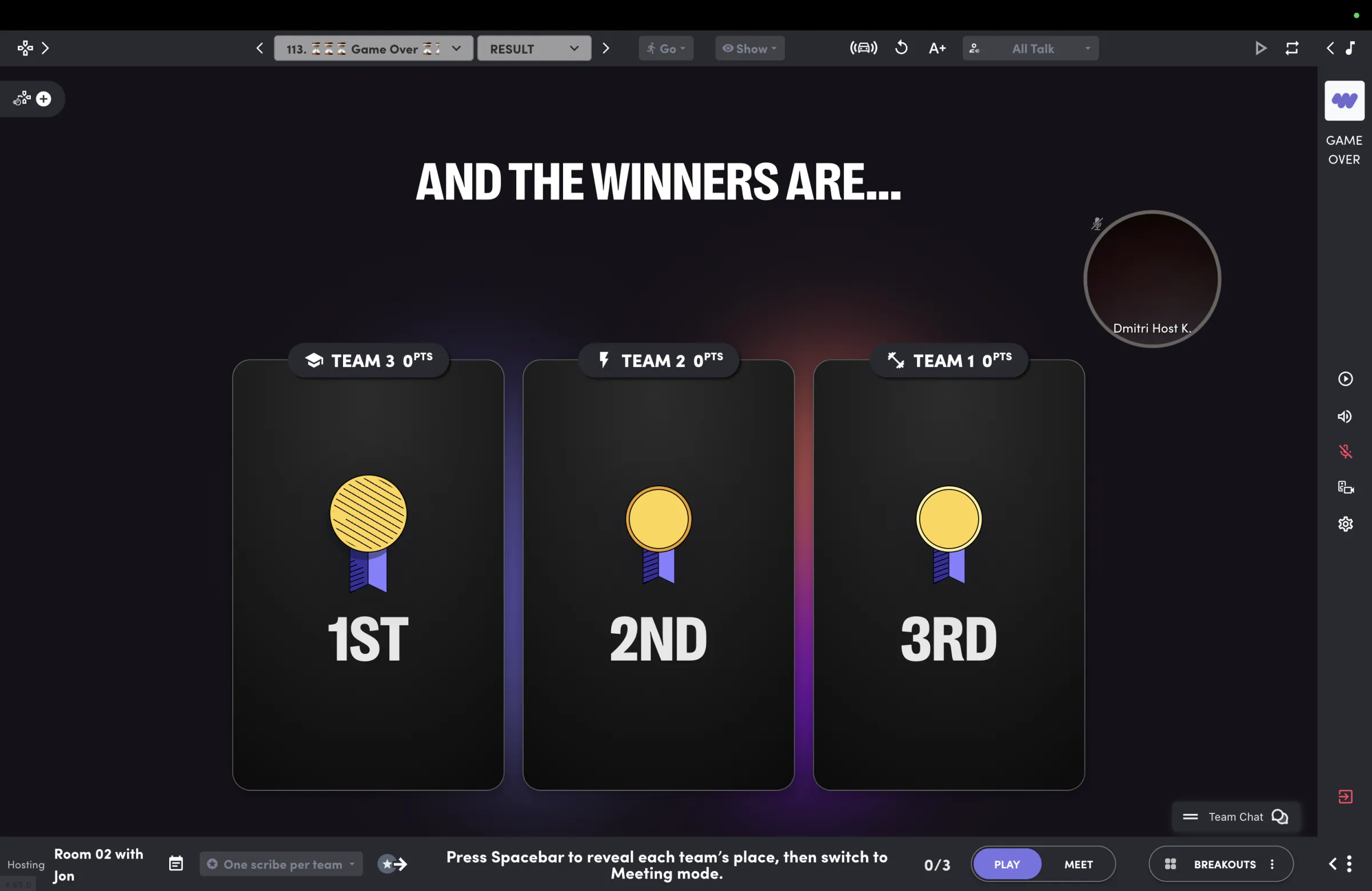
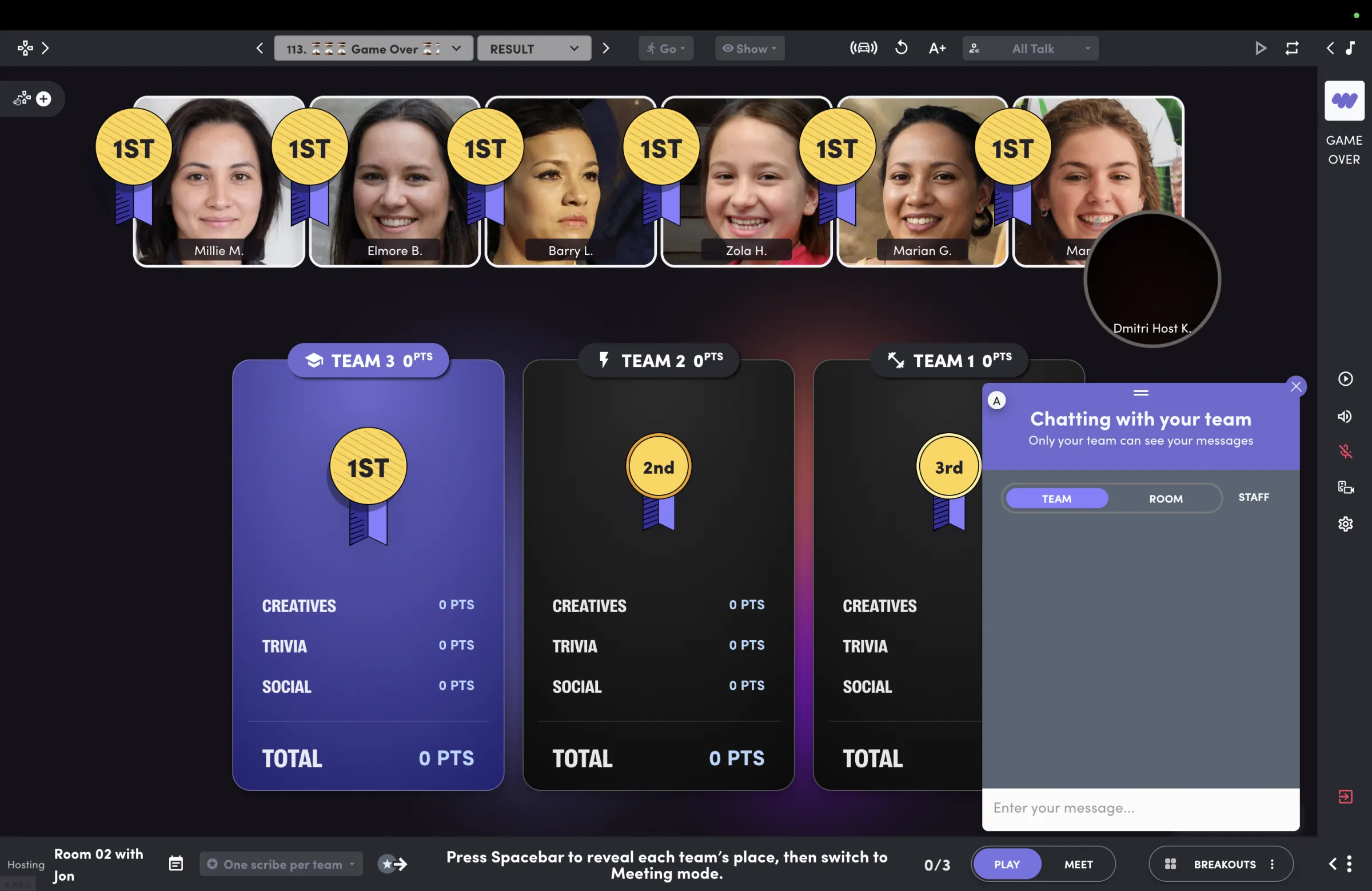
Weve combines live video with team games, activities and networking for corporate clients like Google and Capital One:
- A lobby that holds up to 10,000 attendees, with photo booths and video chats before the event starts.
- Video rooms for up to 25 people, plus small networking chats with ice breakers.
- 100+ games and activities, run by a host on site, a remote host, or the client in self-running rooms.
Engineering highlights
- No headphones needed. Everything on the page that makes sound plays through a local loopback WebRTC connection, so the browser's echo cancellation removes it.
- Screen sharing that stays sharp. A shared screen gets bandwidth priority and other videos drop to low quality.
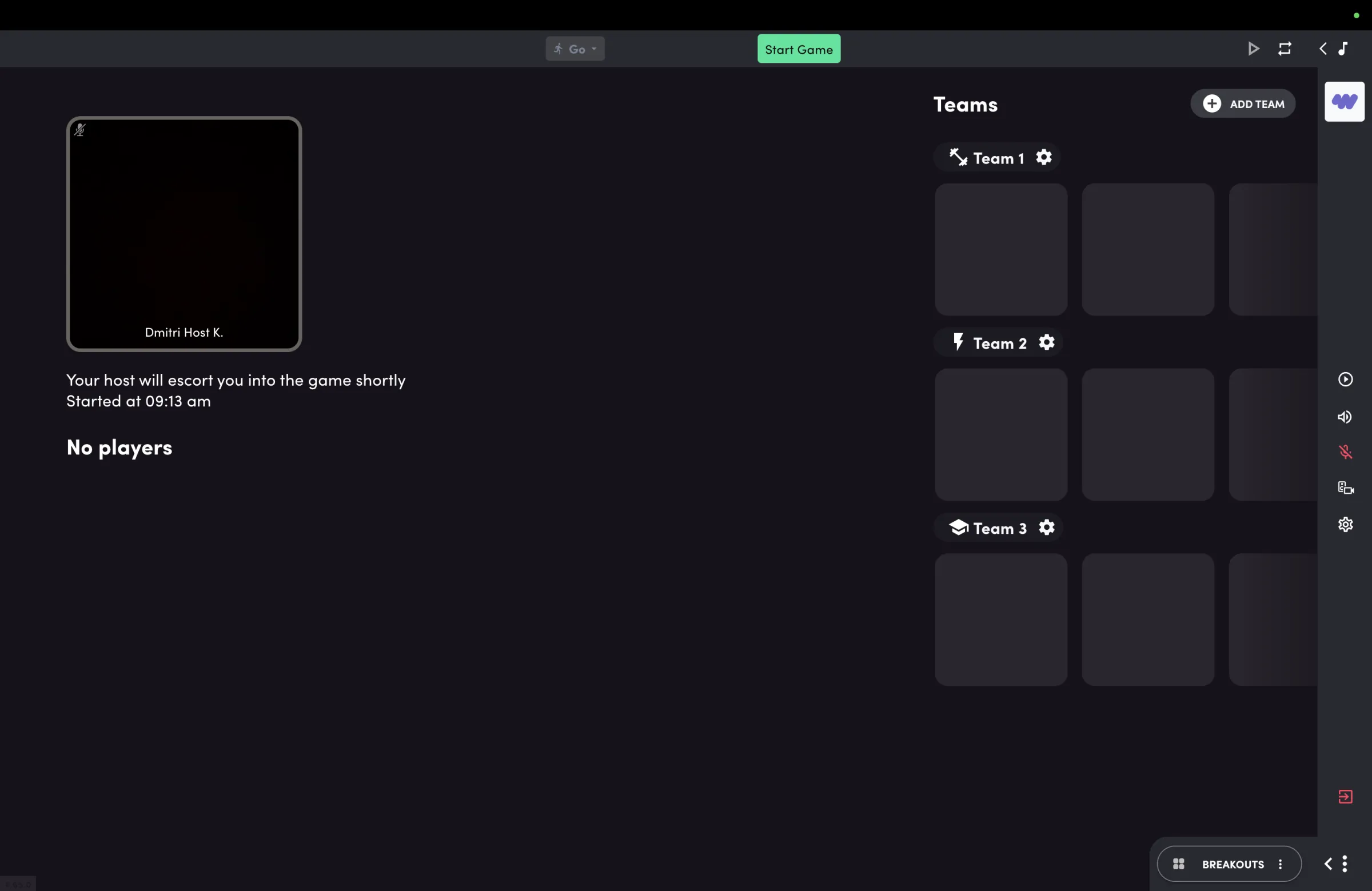
- Autopilot and demo mode. Games advance on their own, and automated players fill teams so a prospect can try a game alone.
- Video conferencing and broadcast modules on AWS with the Amazon Chime SDK.
- Hybrid events. When offices reopened, I designed a rules framework for audio and video when remote players and people in the room play together.
Outcome
The company went from $0 to $10M in revenue in seven months and ran thousands of events a month on Weve by early 2021. I kept leading the team that extended it through 2026.
Screens
Weve in use
 Ask my AI