Case study · Porooch
Know who has your gear, and where
Crews that share tools, flight cases and dollies lose hours to 'who has it?' calls. I built Porooch, where a printed QR label and a phone are the whole system, end to end on my own with agentic, AI-driven development. It's live at porooch.com and in a free pilot.
- Client
- Own product
- Role
- Sole developer
- Status
- Free pilot, 2026
- Platform
- iOS, Android, web
0hardware to buy or install
3surfaces: iOS, Android and web
30days of location history, then deleted
The problem
Any business that shares gear, from construction crews to AV and film rental, runs on a sign-out sheet nobody keeps. Fleet trackers answer it with a gateway in every vehicle and a long contract. Porooch is built from things a crew already has: a printer and the phones in their pockets.
How it works
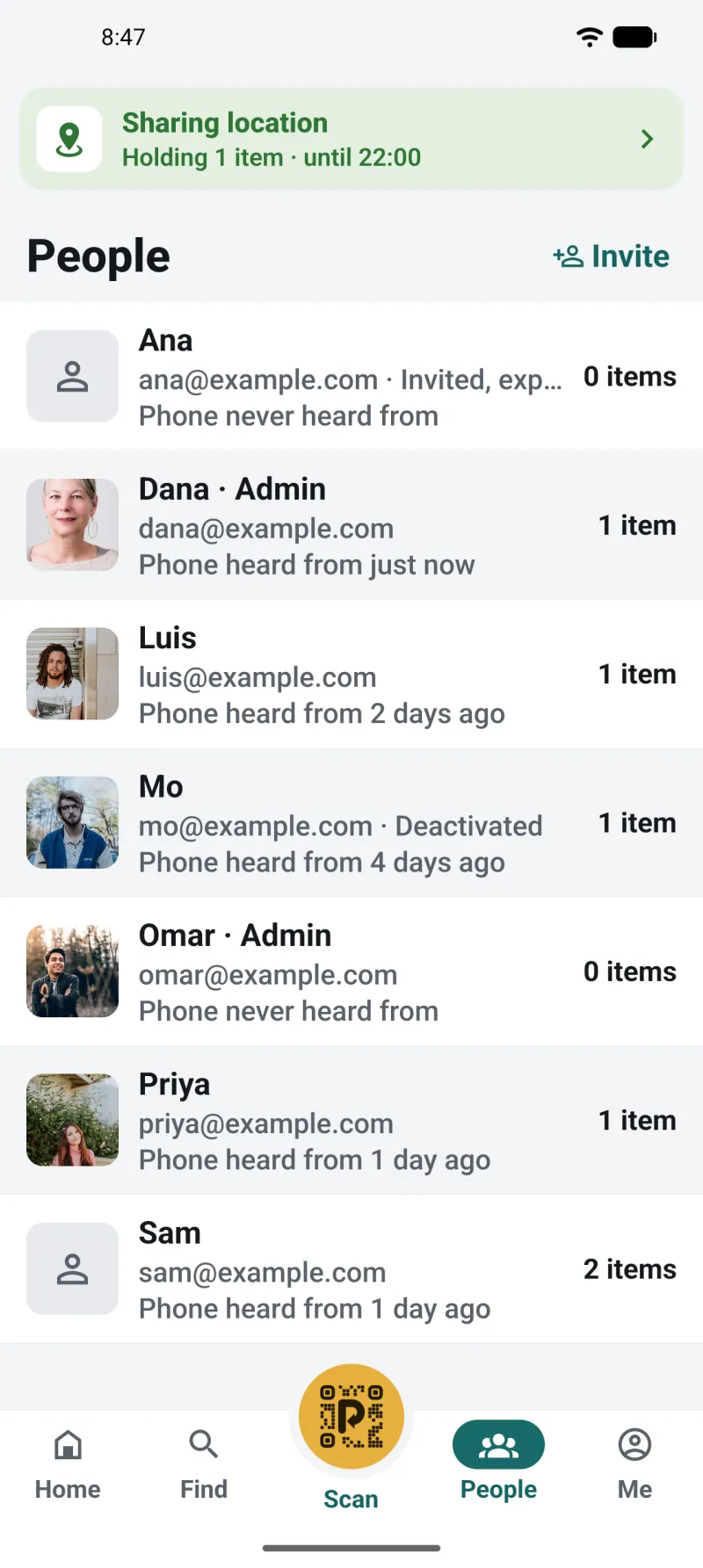
- Label it. An admin adds an item and prints its QR label on any printer. The label is a short universal link, so it opens the app when it's installed and the web app otherwise.
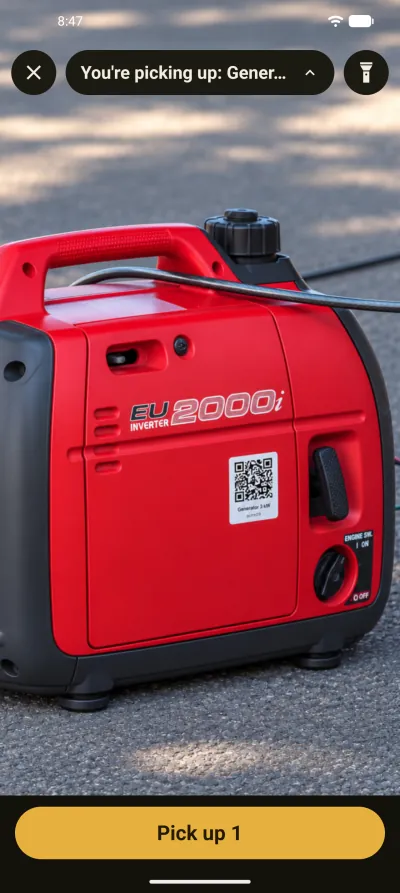
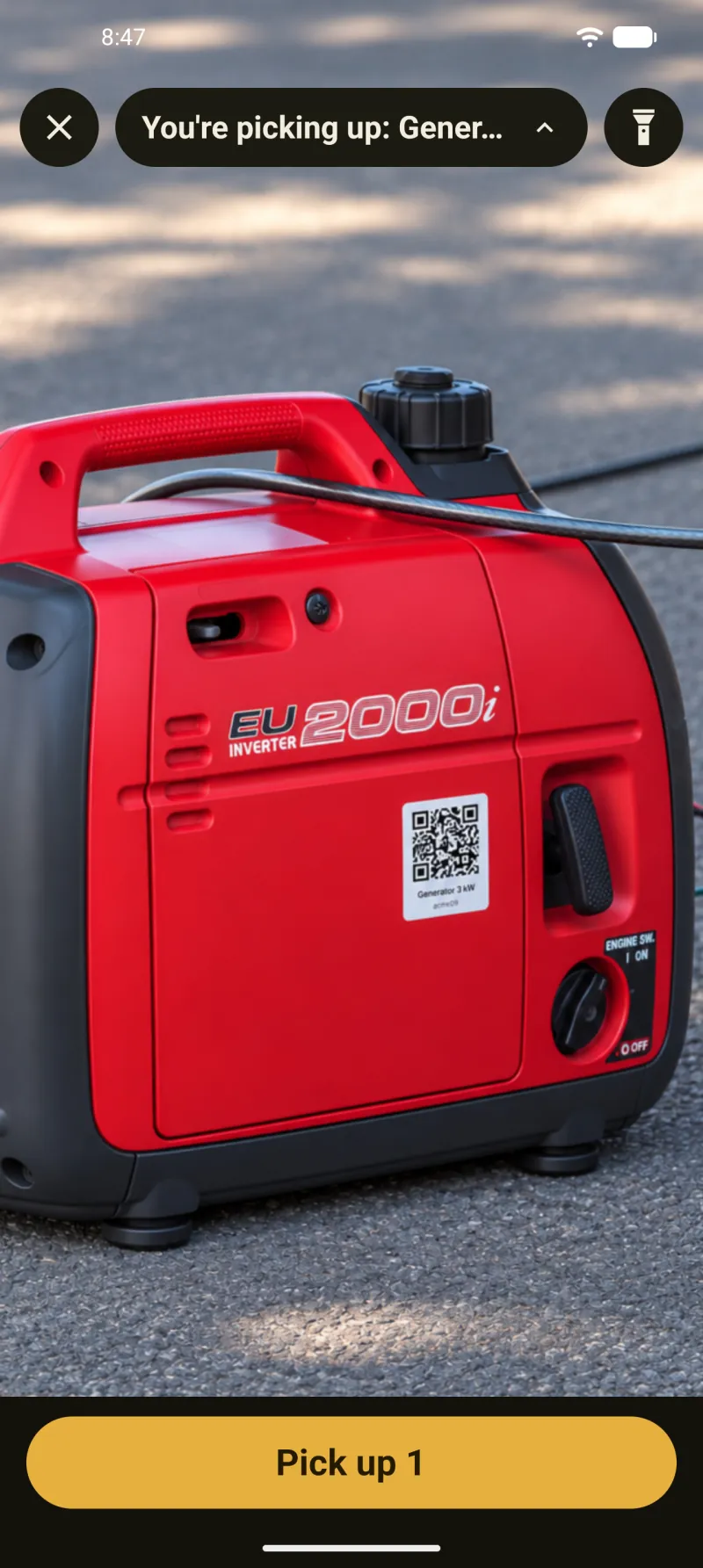
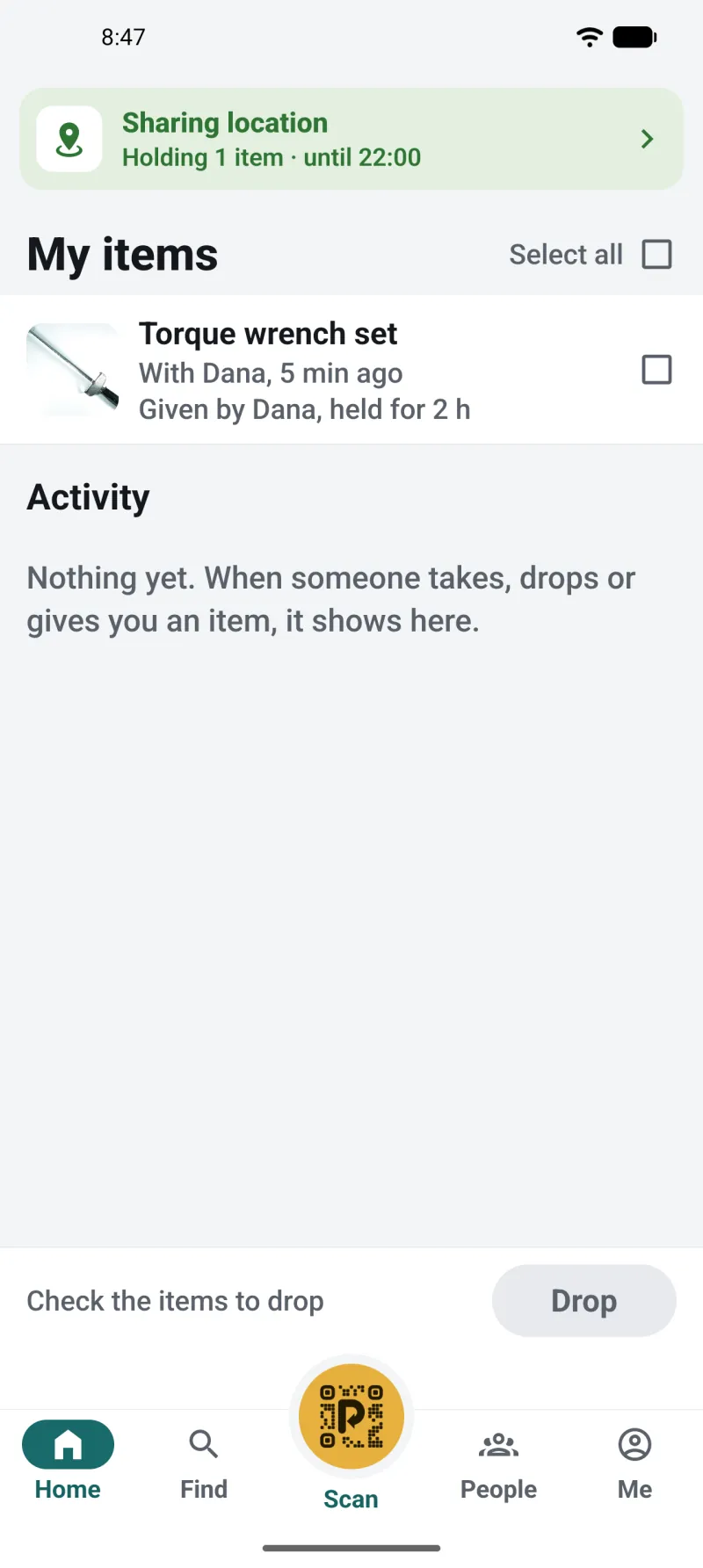
- Scan to pick up. Scan one label or a whole kit, hear a ding for each, tap Pick up once. If someone else had an item, they're told.
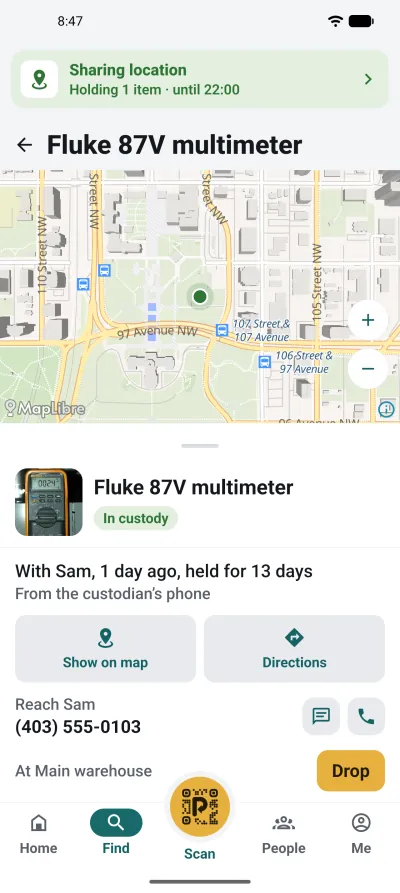
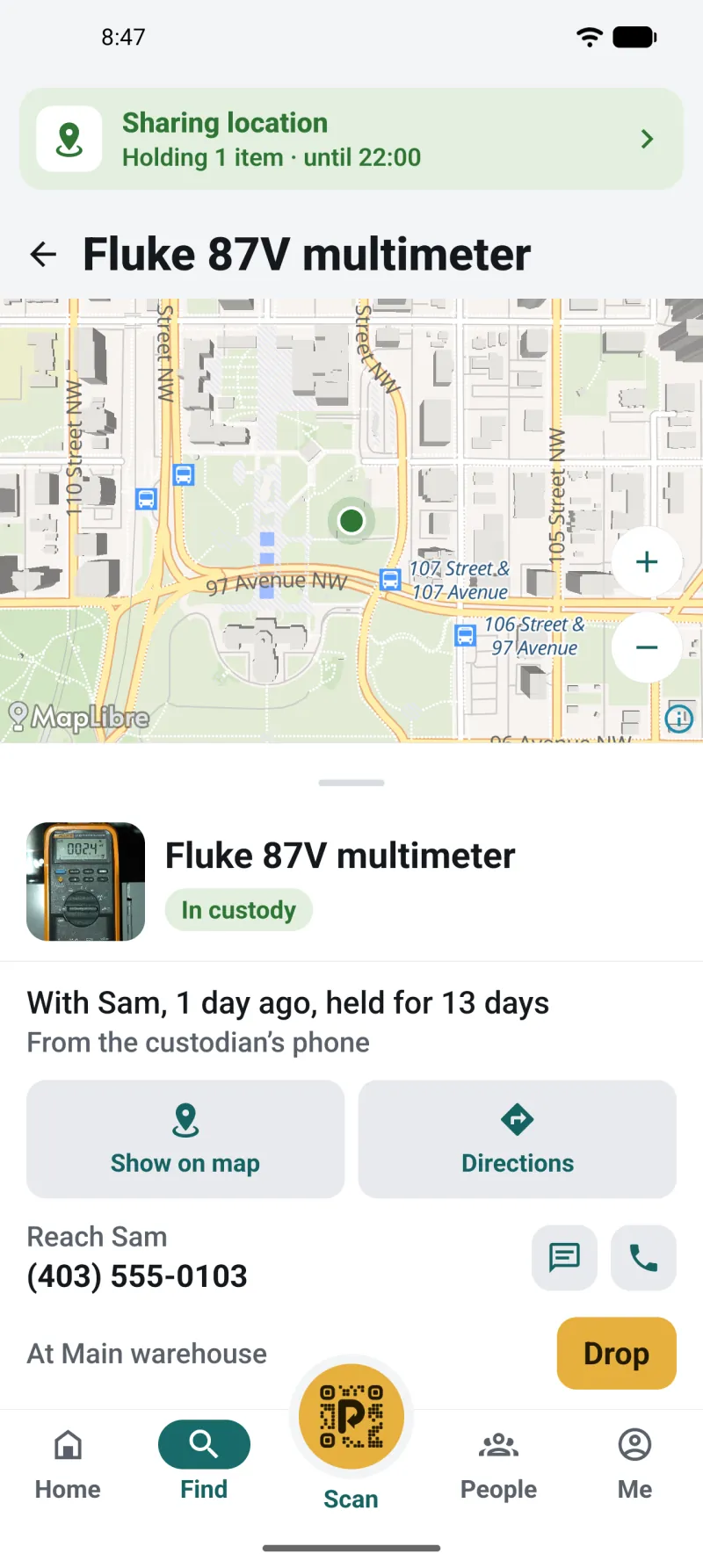
- Drop where it belongs. Admins draw places on a map: a yard, a warehouse, a job site for the month. Drop only works inside one, so nothing gets left at a gas station.
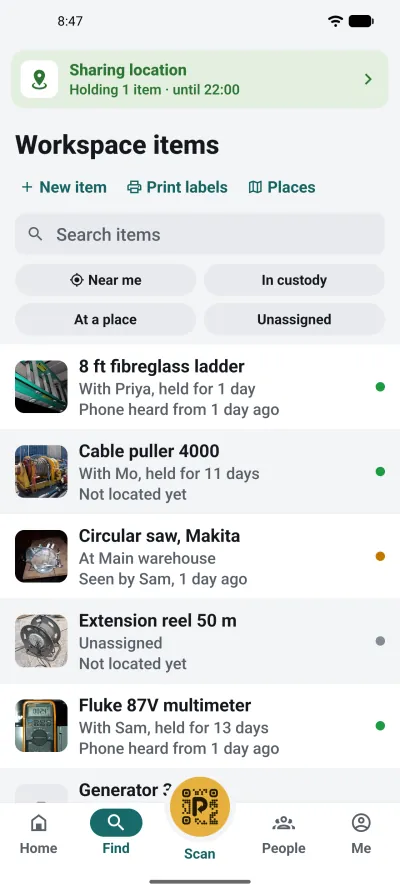
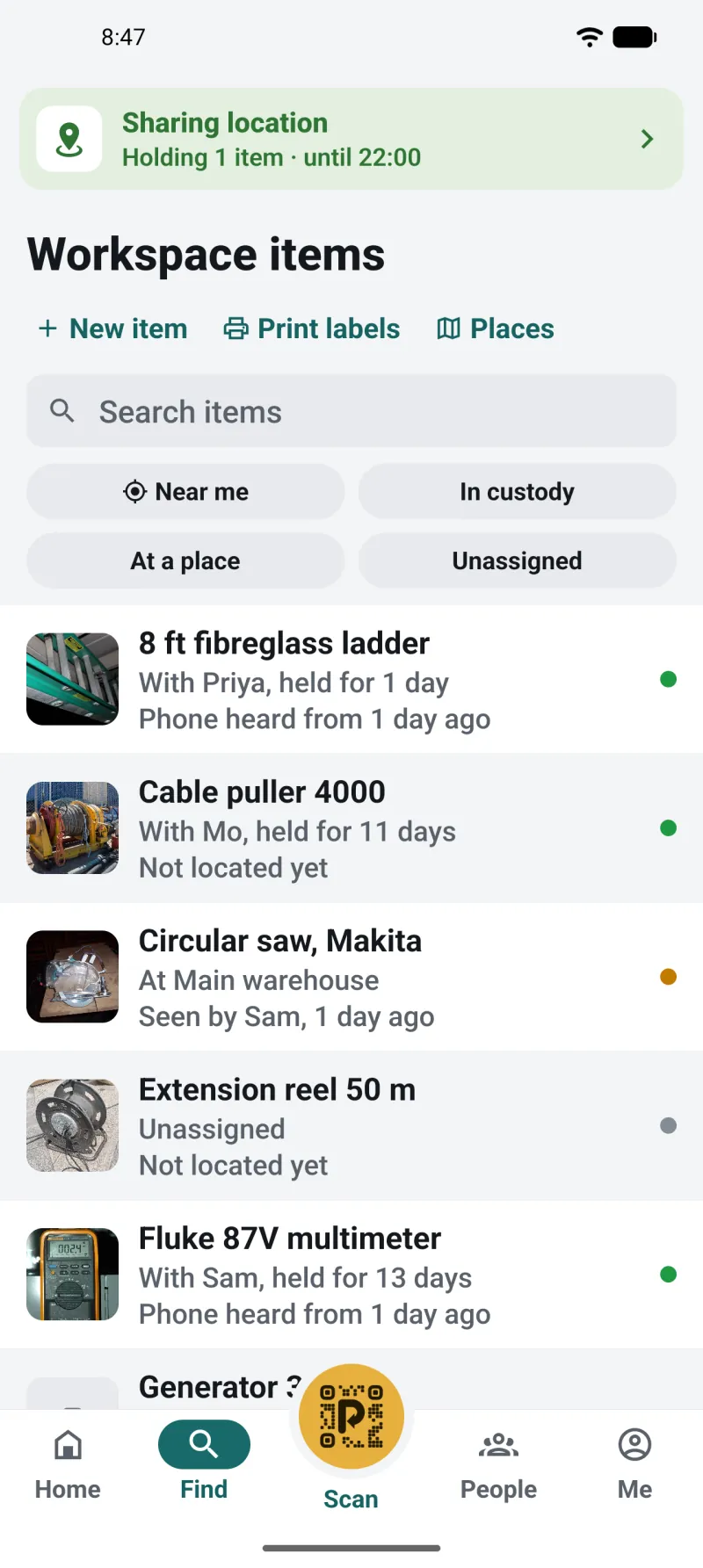
- Who has it, and where. A held item follows its holder's phone during working hours. Every location says where it came from and how old it is. The record is best effort by design, there to find gear, not to blame people.
Private by default
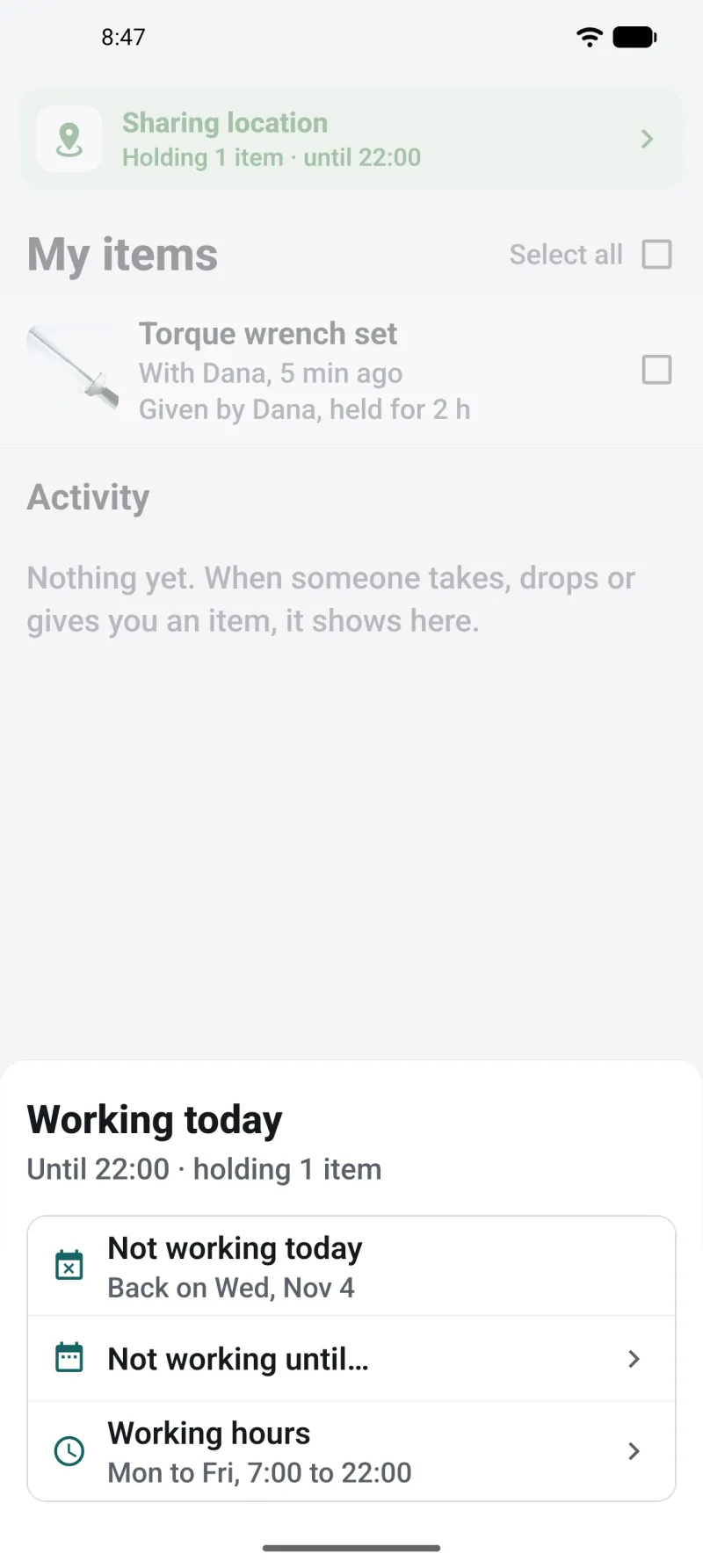
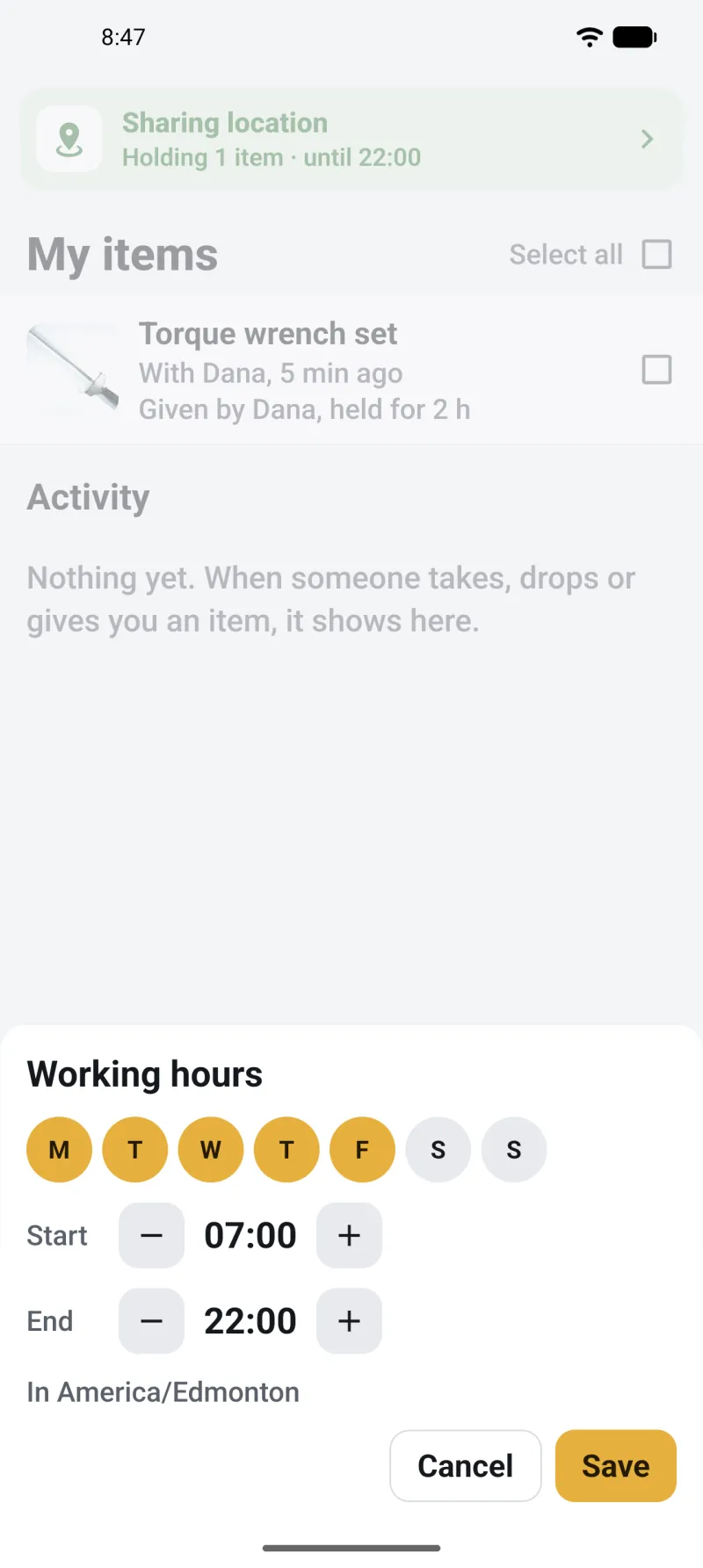
Porooch tracks gear, not people. A phone shares location only during the hours its owner set, and only while they hold at least one item. Hands empty, phone quiet. "Not working today" turns it off in two taps, everyone reads a plain notice before first use, and location points are deleted after 30 days.
How it's built
- One React Native app for iOS, Android and the browser, with the same screens on all three. Camera scanning, MapLibre maps, label PDFs and the phone's print dialog.
- Native location modules in Swift and Kotlin that run the working-hours and holding-items rules on the phone, batch points every few minutes and check in on the half hour, so a phone lasts a full workday.
- A TypeScript API on Cloudflare Workers over PostgreSQL with PostGIS: places are polygons, the Drop check is a geography query on the server, and "Near me" sorts by distance.
- No passwords. Sign-in is a 6-digit code by email, with Better Auth self-hosted in the API. Invites, rate limits and lockouts included.
- Offline first. Pick-ups and drops queue on the phone and send when it's back online; the server re-checks every one on arrival.
- Push through Firebase Cloud Messaging for custody changes, private photos behind short-lived signed links, and a staff dashboard for workspaces and support.
- The landing page at porooch.com with the free-pilot form, Eleventy on Cloudflare like this site.
Outcome
A complete product in a few weeks, from product spec and research to native modules, API, three app surfaces, store listings and a landing page, built by one engineer directing AI agents in parallel lanes. The first crews are piloting it now.
Screens
Porooch in use
 Ask my AI